E-waste recycling in Kolkata means handing over old electronics laptops, phones, batteries, ACs, or office IT equipment to a CPCB-authorised recycler instead of a local kabadiwala. In Kolkata, the safest options are certified pickup services (like CirQula), authorised dismantling units, and manufacturer take-back programs. Informal recycling at hubs like Chandni Chowk or Topsia is illegal under the E-Waste (Management) Rules, 2022 and exposes toxic lead, mercury, and cadmium to workers and soil.
This guide covers exactly how e-waste recycling works in Kolkata, the law, the hotspots to avoid, how to pick a genuine recycler, the step-by-step pickup process, and answers to the questions people actually search for before disposing of their electronics.
Why E-Waste Recycling Matters in Kolkata?
Kolkata is one of eastern India’s largest electronics markets and, by extension, one of its largest e-waste generation points. As a metro of over 14 million people with a dense concentration of IT offices, government institutions, and consumer electronics retailers, the city produces a steady, growing stream of discarded computers, mobile phones, batteries, and appliances.
A few facts that frame the problem:
- India generates close to 1.75 million tonnes of e-waste annually, and West Bengal is among the top contributing states in eastern India.
- Formal recycling capacity remains limited; a large share of e-waste generated in and around Kolkata is still routed through informal scrap markets rather than authorised facilities.
- Kolkata currently has no formal PCB (printed circuit board) recycling facility; boards collected here are typically sent to Delhi or Moradabad for metal extraction, which adds a layer of risk if the intermediate handling isn’t compliant.
- Known informal e-waste trading hotspots in and around the city include areas like Chandni Chowk, Manicktala, Phool Bagan, Rajabazar, Kadapara, Girish Park, Topsia-Tiljala, Khidderpore-Metiabruz, and parts of Howrah — where dismantling is often done manually, without protective equipment or environmental controls.
This is exactly why choosing a certified e-waste recycler in Kolkata not the nearest scrap dealer, matters for your data security, your legal compliance, and the environment.
What Counts as E-Waste?
Under Indian e-waste rules, e-waste covers any electrical or electronic equipment that’s been discarded, including:
- IT & office equipment: desktops, laptops, monitors, servers, printers, scanners, UPS units
- Mobile & communication devices: smartphones, tablets, landline phones, routers
- Consumer electronics: TVs, ACs, refrigerators, washing machines, microwaves
- Batteries: lithium-ion, lead-acid, and other battery waste
- Cables, chargers, and accessories
- Industrial and medical electronic equipment
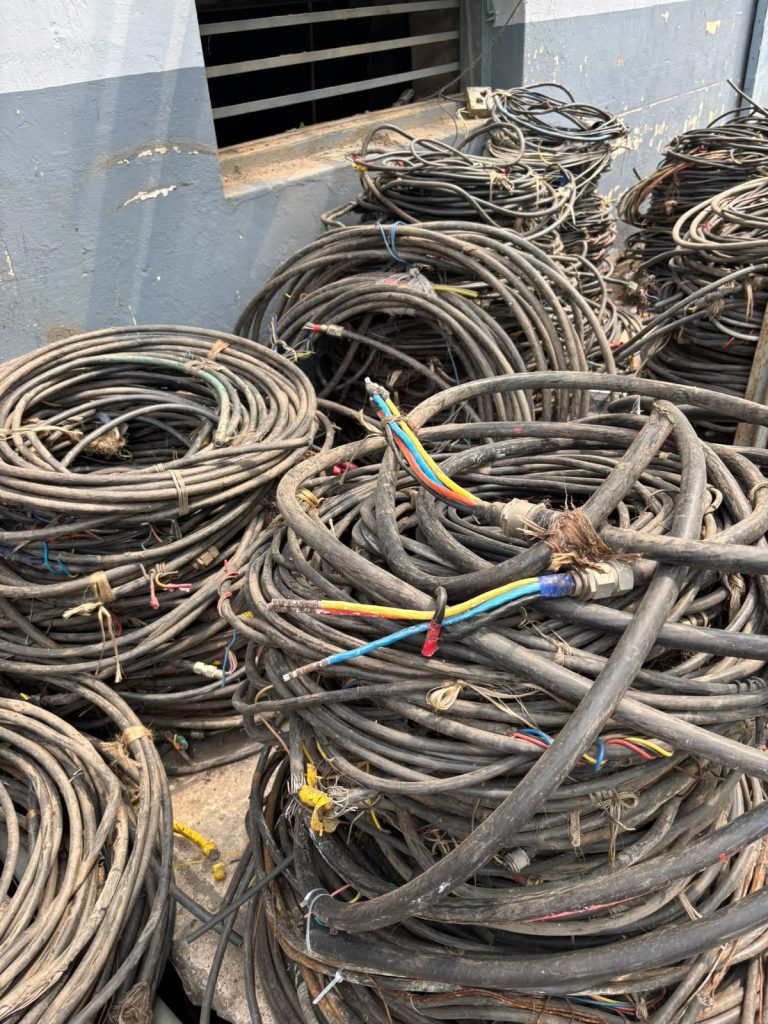
If it has a circuit board, a battery, or a plug, it’s very likely classified as e-waste and shouldn’t go into a regular garbage bin.
Is E-Waste Recycling Mandatory in Kolkata? (The Legal Framework)
Yes, for most categories of generators, it is. Here’s the framework that applies:
E-Waste (Management) Rules, 2022 (administered by the Central Pollution Control Board, CPCB, and enforced regionally through the West Bengal Pollution Control Board, WBPCB) require:
- Producers, manufacturers, and importers to meet Extended Producer Responsibility (EPR) targets for the e-waste they put into the market.
- Bulk consumers, corporates, government offices, and educational institutions to channel e-waste only to CPCB-authorised recyclers or dismantlers, and to maintain records of what they dispose of.
- All dismantling and recycling to be carried out only by entities holding valid CPCB/WBPCB authorisation.
- A ban on open burning and unauthorised acid-based extraction, both of which are common in informal e-waste hubs and release dioxins, furans, and heavy metals into the air and groundwater.
If you’re a household, you’re not legally mandated in the same way bulk consumers are, but disposing of e-waste responsibly is still the only way to keep toxic materials mercury in CFC bulbs, lead in CRT monitors, cadmium in batteries out of Kolkata’s soil and water table.
The Hidden Risk of Informal Recycling
Kolkata’s informal e-waste economy is large, and it survives because it pays cash on the spot. But manual dismantling without protective gear — de-soldering boards over open flames, acid-leaching for gold recovery, and burning cable insulation to recover copper — has well-documented health and environmental consequences:
- Heavy metal exposure (lead, mercury, cadmium, chromium) for workers, often without any safety equipment
- Soil and groundwater contamination near dismantling clusters
- Air pollution from burning plastics and insulation
- No data destruction guarantee — devices with hard drives, SIM data, or account credentials can be resold with data intact, creating a data-breach risk for individuals and a compliance risk for businesses
This is the core reason certified recyclers exist: they combine legal compliance, safe processing, and verifiable data destruction in one workflow.
How to Choose a Genuine E-Waste Recycler in Kolkata?
Before you hand over a single device, verify these five things:
- CPCB or WBPCB authorisation: Ask for the registration/authorisation number and confirm it against public CPCB records.
- Certificate of Recycling / Destruction: A legitimate recycler issues a certificate after processing, useful for personal records and mandatory for corporate compliance.
- Data destruction process: For laptops, phones, and drives, ask whether they do certified data wiping or physical destruction, and whether you get a data destruction certificate.
- Transparent pickup and pricing: reputable recyclers quote clearly, without vague “market rate” promises that change on pickup day.
- Traceable logistics: your e-waste should be tracked from pickup to final processing, not handed off to unregistered sub-contractors.
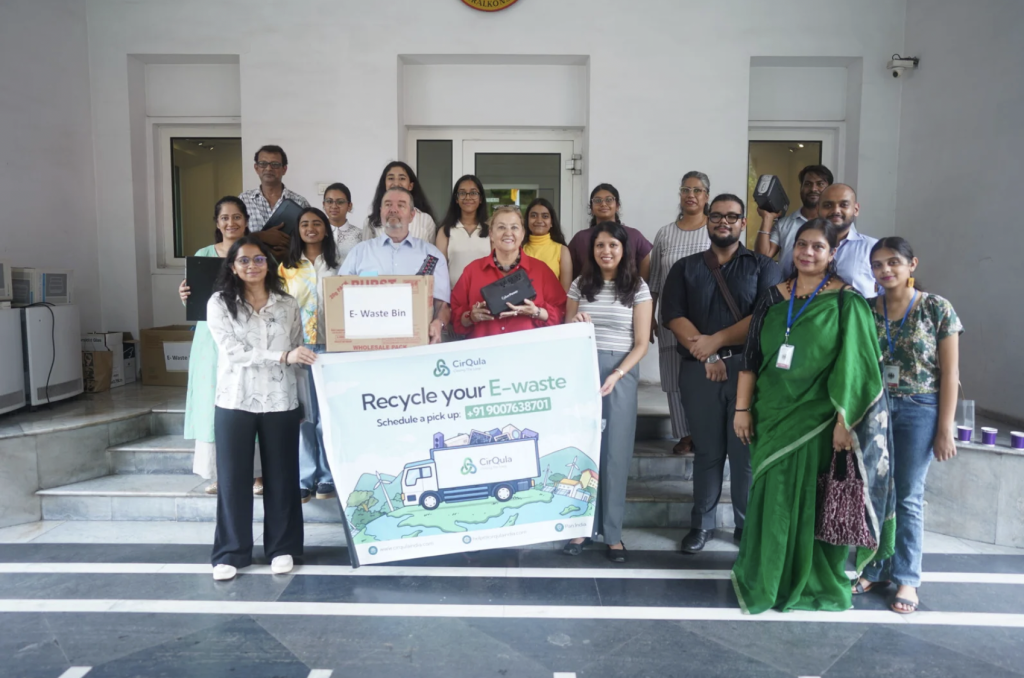
CirQula operates as a doorstep e-waste and battery collection service built around exactly this checklist: pan-India pickup, certified data destruction, and documentation you can actually use for compliance or peace of mind. You can see how the process works and book a pickup directly through CirQula.
Step-by-Step: How to Recycle E-Waste in Kolkata
- Sort your e-waste. Separate working devices (candidates for resale/donation) from broken or obsolete ones (candidates for recycling).
- Back up and wipe personal data on any device with storage, or confirm your recycler will do certified data destruction for you.
- Choose a certified recycler. Avoid roadside scrap buyers for anything with a circuit board or battery.
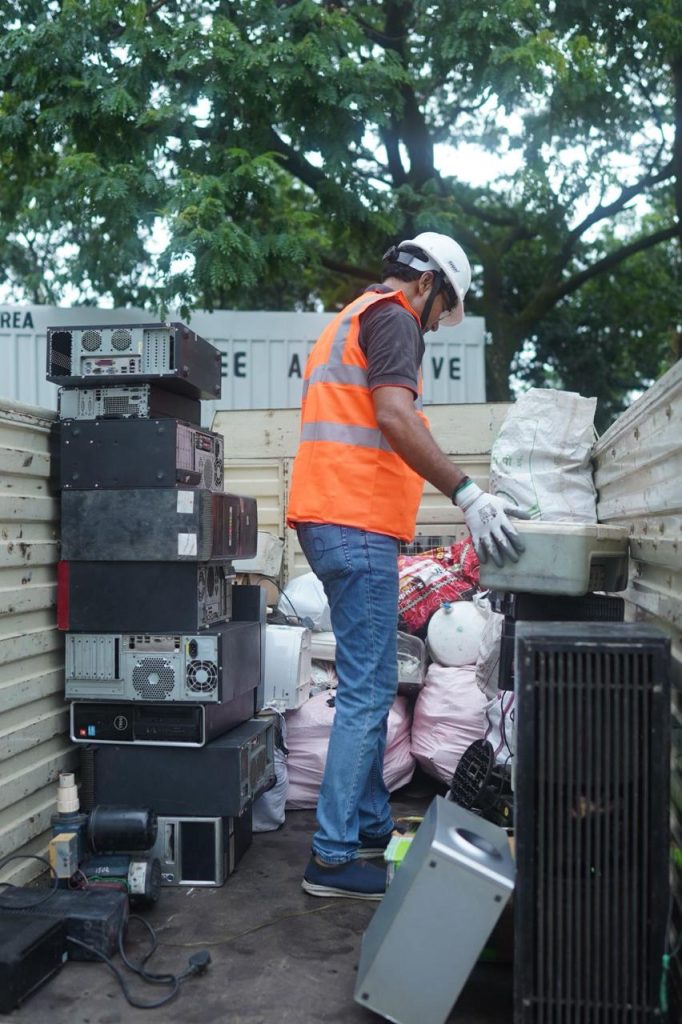
- Schedule a pickup. Most certified services, including CirQula, offer doorstep collection so you don’t need to transport bulky items like monitors, ACs, or office IT equipment yourself.
- Get documentation. Ask for a collection receipt and, once processed, a certificate of recycling or destruction, essential if you’re a business handling this for compliance or CSR reporting.
- For businesses: maintain these records centrally; they’re what you’ll need during EPR audits or ESG/CSR reporting cycles.
E-Waste Recycling for Businesses in Kolkata
Corporate and institutional e-waste in Kolkata comes with additional obligations that individuals don’t have:
- EPR compliance documentation for every device disposed of
- Bulk/scheduled pickups for IT asset refresh cycles, office relocations, or annual disposal drives
- Secure, auditable data destruction for hard drives, servers, and mobile fleets critical for BFSI, IT/ITES, and healthcare organisations handling sensitive data
- CSR and sustainability reporting — recycling certificates double as evidence for ESG disclosures
If your organisation is based in Kolkata and needs a structured, compliant e-waste program rather than one-off disposal, CirQula’s corporate e-waste and data destruction services are built specifically around EPR and CSR requirements worth a look before your next IT asset refresh.
What Happens to E-Waste After It’s Collected?
A properly certified process typically follows these stages:
- Collection & segregation — devices are sorted by category (IT equipment, batteries, appliances, etc.)
- Manual dismantling — components are separated: circuit boards, batteries, plastics, metals, glass
- Data destruction — storage media is wiped or physically destroyed under documented protocols
- Material recovery — metals like copper, aluminium, and precious metals (gold, silver, palladium) are recovered for reuse; plastics and glass are processed separately
- Hazardous component handling — batteries, mercury-containing parts, and similar materials are sent to specialised, authorised handlers
- Documentation & certification — a certificate of recycling/destruction is issued to the generator
Common Mistakes to Avoid
- Selling old laptops/phones to unregistered scrap dealers without wiping data first
- Assuming municipal garbage collection handles e-waste — it doesn’t, and mixing e-waste with regular waste is against the rules
- Throwing batteries in the trash — they’re a fire and contamination hazard and need separate handling
- Skipping documentation for office IT disposal — this becomes a compliance gap during EPR audits
- Choosing the highest cash offer without checking authorisation — informal buyers often outbid certified recyclers because they skip safety and compliance costs
Frequently Asked Questions
Q1. Is e-waste recycling free in Kolkata?
Many certified recyclers, including CirQula, offer free doorstep pickup for e-waste; some categories (like functional electronics with resale/recovery value) may even be bought back, while others are recycled at no cost to you.
Q2. What can I do with old laptops and phones in Kolkata?
If the device still works, consider resale, donation, or trade-in. If it’s broken or obsolete, hand it to a CPCB-authorised recycler for certified data destruction and material recovery — not a local scrap dealer.
Q3. Are there e-waste collection centers in Kolkata?
Yes, but availability and authorisation vary widely. Rather than searching for a physical drop-off point, most people find doorstep pickup services more reliable, since they guarantee authorised handling and documentation.
Q4. Is it illegal to throw e-waste in regular garbage in Kolkata?
Yes. Under the E-Waste (Management) Rules, 2022, e-waste must be channelled to authorised collection points or recyclers, not disposed of with municipal solid waste.
Q5. How do I know if a Kolkata e-waste recycler is legitimate?
Check for a valid CPCB or WBPCB authorisation number, ask for a certificate of recycling/destruction, and confirm they offer transparent, documented pickup, not just a cash-for-scrap exchange.
Q6. Do businesses in Kolkata need to report e-waste disposal?
Yes, bulk consumers (offices, institutions) are expected to maintain records of e-waste disposed through authorised channels, which supports EPR compliance and CSR/ESG reporting.
Q7. What happens to data on my old hard drive or phone?
A certified recycler performs certified data wiping or physical destruction and can provide a data destruction certificate, something informal scrap dealers cannot guarantee.
Q8. Which areas in Kolkata are known for informal e-waste trading?
Hotspots such as Chandni Chowk, Manicktala, Rajabazar, Girish Park, Topsia-Tiljala, and parts of Howrah have historically handled significant informal e-waste volumes; these are best avoided in favor of certified channels.
Key Takeaways
- E-waste recycling in Kolkata is governed by the E-Waste (Management) Rules, 2022, and informal dismantling is both illegal and environmentally harmful.
- Always verify CPCB/WBPCB authorisation and ask for a certificate of recycling or data destruction before handing over any device.
- Doorstep pickup services remove the hassle of finding a reliable drop-off point and ensure traceable, compliant processing.
- Businesses have added obligations around EPR documentation and should build a recurring, auditable disposal process rather than ad-hoc scrap sales.
Ready to recycle responsibly? Schedule a free e-waste pickup with CirQula and get certified data destruction and documentation for every device you hand over.
Pingback: Lithium-Ion Battery Recycling in India 2026 - CirQula Blog
Pingback: 100 Pickups, 50+ Corporates Onboarded: CirQula India - CirQula Blog