Every old phone tossed in a drawer, every laptop left to gather dust, every broken charger thrown in the regular bin adds up to something much bigger than most of us realise. India is now sitting on one of the fastest-growing e-waste problems in the world, and the numbers tell a story that is impossible to ignore.
How Big Is the Problem, Really?
India has become the third-largest generator of electronic waste on the planet, trailing only China and the United States. According to Central Pollution Control Board (CPCB) data shared with the Lok Sabha, the country generated roughly 14.14 lakh metric tonnes (about 1.41 million tonnes) of e-waste in 2025–26 alone, and that number has been climbing every single year. In 2023–24, the figure stood at 12.54 lakh metric tonnes; by 2024–25 it had risen to nearly 13.98 lakh metric tonnes. The trajectory is steep, and it isn’t slowing down.
Zoom out further, and the growth becomes even more striking. E-waste generation in India has surged more than 150% since 2017–18, and some estimates suggest volumes could nearly double again by 2030. A large share of this waste, over 60% by some counts, comes from just 65 urban centres, with Mumbai, Delhi, Bengaluru, Chennai, and Kolkata among the biggest contributors.
The Recycling Gap
Here’s the part that should concern all of us: generating e-waste is only half the story. What happens to it afterward matters just as much.
On paper, recycling rates have improved. The share of e-waste formally processed rose from around 22% in 2019–20 to roughly 43% by 2023–24, and the latest government figures for 2025–26 show about 9.79 lakh metric tonnes recycled out of the 14.14 lakh metric tonnes generated, a recycling rate pushing past 65% for that year according to official data. That’s real progress.
But it also means a substantial share of e-waste is still slipping through the cracks, handled by informal recyclers, kabadiwalas, and scrap dealers who often lack the equipment or training to do it safely. Informal processing frequently involves open burning, acid leaching, and manual dismantling without protective equipment, exposing workers and nearby communities to lead, mercury, cadmium, and other toxic substances. This isn’t a hypothetical risk. It’s an ongoing public health issue playing out in scrapyards across the country.
Why This Isn’t Just an “Environmental” Story
It’s tempting to file e-waste under generic environmental concerns, but the reality cuts across public health, urban planning, and economic policy all at once:
- Health risks — Toxic heavy metals from improperly processed e-waste contaminate soil and groundwater, and informal recycling workers, many of whom are children, face direct exposure.
- Resource loss — Every phone or laptop that ends up in a landfill instead of a proper recycling facility takes recoverable copper, aluminium, and even gold down with it. A functioning circular economy turns waste back into raw material instead of throwing it away twice.
- Regulatory pressure — India’s E-Waste (Management) Rules, 2022 introduced Extended Producer Responsibility (EPR), requiring manufacturers to take accountability for what happens to their products at end of life. Compliance is tightening, and businesses that ignore it are increasingly exposed.
- Urban infrastructure strain — With over 60% of e-waste concentrated in a handful of cities, local systems are being tested well beyond what they were built to handle.
Where Companies Like CirQula India Fit In
This is exactly the gap that authorised, science-led recyclers are trying to close. CirQula India works across e-waste, glass, tyres, solar panels, and lithium batteries — recovering usable materials and channelling them back into circulation instead of letting them sit in landfills or move through unregulated scrapyards.
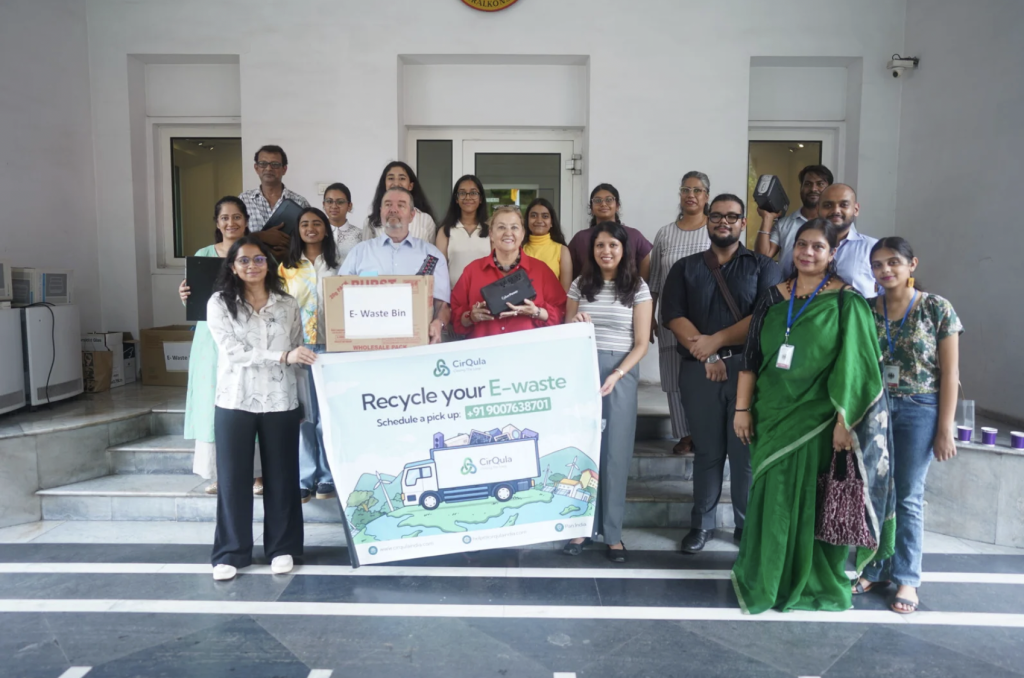
It’s also why community-driven collection efforts matter so much. Earlier this year, CirQula India partnered with Nirmyx — a student-led volunteer initiative started by ten students at Modern High School for Girls — to run a month-long e-waste collection drive in Kolkata for World Environment Day. The drive collected over 500 kg of old phones, chargers, laptops, and small appliances, all of which were handed over for authorised, responsible recycling. It’s a small example of what’s needed at scale: get e-waste out of drawers and dustbins and into the hands of recyclers equipped to handle it properly.
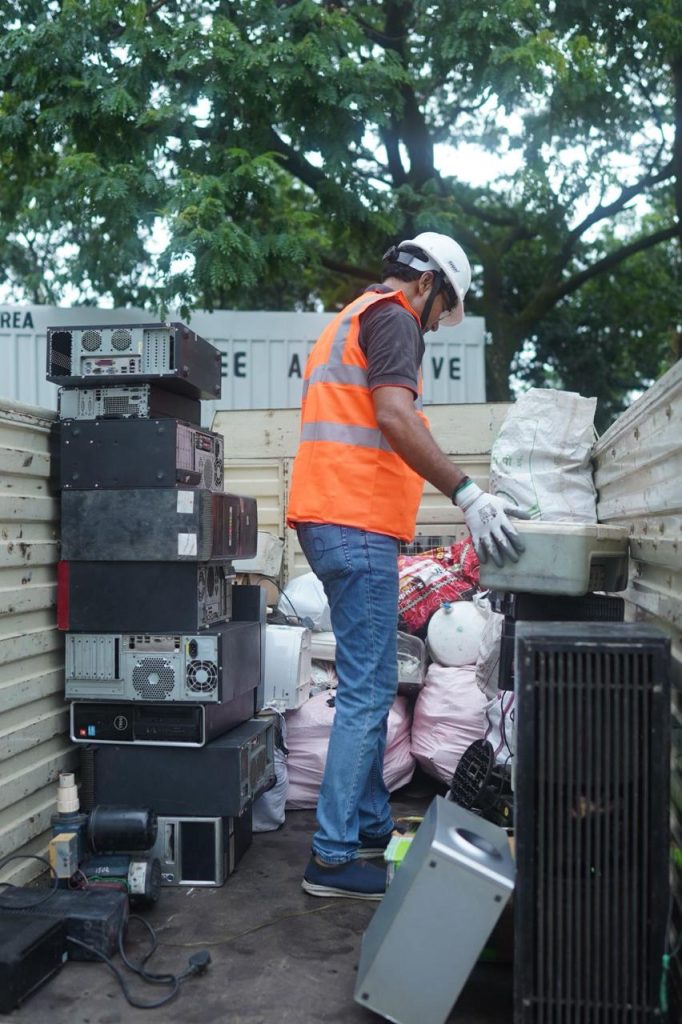
As CirQula India’s Founder & CEO Priyasha Singhania has pointed out, meaningful change starts with awareness — and responsible e-waste management has stopped being optional. Efforts like the Nirmyx collection drive show that shift starting to happen on the ground, one household and one office at a time.
What You Can Actually Do
The scale of India’s e-waste problem can feel overwhelming, but individual choices genuinely move the needle when enough people make them:
- Never bin your electronics. Regular waste collection isn’t equipped to handle e-waste safely.
- Use authorised collection points or manufacturer take-back programmes instead of unverified scrap dealers.
- Wipe your data first — back up and factory-reset devices before handing them over.
- Push your workplace or school to run a collection drive, the way Nirmyx did in Kolkata.
- Choose certified recyclers like CirQula India that follow documented, safe processing standards rather than informal operators.
India’s e-waste numbers are only going in one direction right now. Whether that trend keeps accelerating — or starts bending toward genuine recovery and reuse — depends on decisions being made in homes, schools, offices, and boardrooms today.
Want to be part of the circular economy movement? Visit CirQula to learn how you can recycle responsibly.