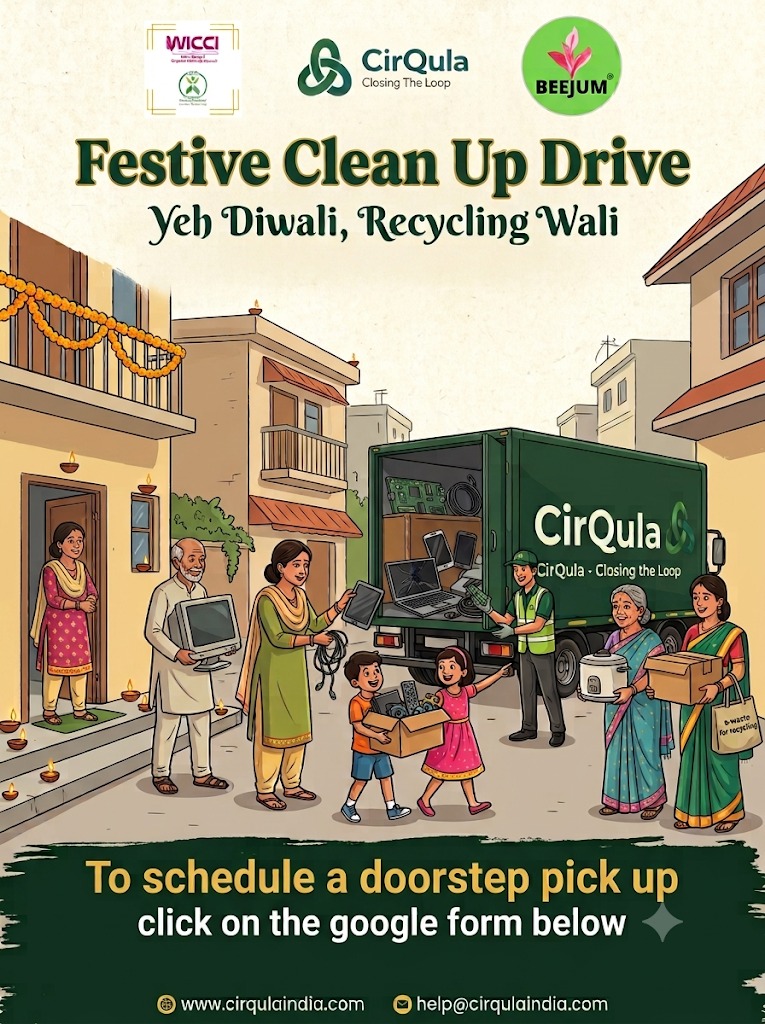
To dispose of old electronics responsibly in India this festive season, back up and wipe your data, remove batteries and SIM cards, and hand the devices only to an authorised e-waste recycler or a registered take-back programme, such as a doorstep pickup. Never put electronics in the household dustbin or sell them to unverified scrap buyers. Ask for a record of what was collected.
Diwali falls on Sunday, 8 November 2026, so the weeks around Dhanteras (Friday, 6 November) are the natural time to clear cupboards and book a pickup. This guide shows you how, step by step.
Why the festive season creates an e-waste spike
Festive sales push people to upgrade phones, televisions and appliances, and pre-Diwali cleaning turns up the old devices that were sitting in drawers. The result is a pile of electronics that needs a safe exit within a few weeks.
India’s formal system is already stretched. As reported by Tele.net, India generated about 1.75 million tonnes of e-waste in 2023-24, and only about 0.76 million tonnes was recycled through formal channels, which is under half. The same report puts generation at 1.94 million tonnes for 2024-25 up to December.
The gap matters because old electronics contain lead, mercury, cadmium and arsenic, and lithium batteries can start fires when crushed. When devices are dumped or broken down informally, those materials reach soil, water and the lungs of the people handling them. Sending your devices through an authorised channel is the single most useful thing you can do.
What counts as e-waste in your home
E-waste is any discarded electrical or electronic item, working or not. If it has a plug, a battery or a circuit board, treat it as e-waste. India’s E-Waste (Management) Rules, 2022 bring 106 types of electrical and electronic equipment under producer responsibility, so the list is long.
- IT and telecom: laptops, desktops, monitors, keyboards, printers, routers, mobile phones, tablets, chargers and cables
- Consumer electronics: televisions, set-top boxes, speakers, cameras, game consoles, headphones, remotes
- Household appliances: refrigerators, washing machines, air conditioners, microwave ovens, mixers, irons, geysers
- Batteries and power: phone and laptop batteries, power banks, inverter batteries, UPS units
- Festive leftovers: broken LED string lights, extension boards and electric decorations (confirm acceptance with your recycler)
Large white goods need a separate pickup. CirQula explains how in its guide to recycling fridges, ACs and washing machines.
What Indian law says about e-waste
The E-Waste (Management) Rules, 2022 are India’s main e-waste law, and they came into effect on 1 April 2023. They are built on Extended Producer Responsibility (EPR), which makes brands and manufacturers responsible for the recycling of the products they sell.
Under the rules, manufacturers, producers, refurbishers and recyclers must register on the Central Pollution Control Board (CPCB) portal. Recyclers generate digital EPR certificates for what they process, and companies that miss their targets face environmental compensation.
For you, the practical meaning is simple. The legal system only works if your old device reaches a registered recycler or refurbisher, so choose one that can show its registration instead of whoever offers the highest cash price.
How to dispose of old electronics responsibly: 7 steps
Follow these steps in order and you will cover reuse, data safety and legal disposal.
- Take stock. Gather everything from drawers, lofts and storerooms: phones, chargers, laptops, TVs, appliances and batteries. Group it by type so a recycler can quote and collect in one visit.
- Reuse before you recycle. If a device still works, donate it, hand it down or sell it through a trusted refurbisher. Recycle what is broken or obsolete.
- Back up and wipe your data. Copy photos and files, sign out of your accounts, then factory reset. See the data section below for device-specific steps.
- Remove batteries, SIM cards and memory cards. Keep loose lithium batteries dry, intact and apart from metal objects. Never puncture or crush them.
- Choose an authorised route. Options include a brand or retailer take-back or exchange, an authorised recycler’s doorstep pickup, or a society or office collection drive. Avoid unverified buyers.
- Book the pickup or drop-off. Do it before the Diwali rush, ideally in the week before Dhanteras on 6 November, and confirm the items, the time and the terms.
- Keep proof. Ask for a written record of what was collected, and for a data-destruction certificate if you handed over storage devices.
Five mistakes to avoid with festive e-waste
Most harm comes from a handful of habits, and each one is easy to avoid.
- Binning it. Electronics in household waste end up in landfills or open burning, where toxic metals leach out.
- Selling to whoever pays most. Unverified buyers often strip devices by hand or burn cables for copper, which harms workers and the air.
- Handing over devices with data on them. Phones, laptops and hard drives hold banking apps, photos and ID scans.
- Breaking batteries. A punctured lithium battery can overheat or catch fire, so keep batteries whole and separate.
- Assuming an exchange offer means recycling. A discount on a new device does not tell you where the old one goes. Ask the seller how it is recycled.
How to check that an e-waste recycler is authorised
Ask these five questions before you hand anything over, and walk away if the answers are vague.
| Ask | A good answer looks like |
| Are you registered with CPCB? | A registration or authorisation number you can verify |
| What will I receive as proof? | A written record of items and weight, issued after collection |
| How is my data destroyed? | A named method (wiping or physical shredding) and a certificate on request |
| Where do the devices go next? | A traceable path to an authorised dismantling and recycling facility |
| How are batteries and large appliances handled? | Separate handling and a clear pickup process for fridges, ACs and washing machines |
CirQula’s post on what to ask any recycler goes into more detail.
How to protect your data before recycling
A factory reset is a good start, but the right level of wiping depends on the device.
- Phones and tablets: back up, sign out of Google or Apple accounts, turn off Find My Device, remove the SIM and memory card, then factory reset.
- Laptops and desktops: back up, sign out of cloud and work accounts, remove the device from any company management tool, then reset the system and erase the drive.
- Hard drives, SSDs and pen drives: a simple delete is not enough. If you cannot securely erase them, ask your recycler for certified data destruction and keep the certificate.
- Offices and bulk handovers: record asset tags, and request a destruction certificate for every storage device.
CirQula offers certified data destruction as part of its collection service, so the device is handled and the data is wiped in one process.
Your festive season options, and how CirQula helps
You have three sensible routes this season, and they work best in combination.
- Brand or retailer take-back and exchange. Convenient when you buy a replacement. Ask how the old device is recycled and whether you get a record.
- Housing society, office or school collection drive. The easiest way to move many devices at once, and a good way to involve neighbours and colleagues.
- Doorstep pickup from an authorised recycler. Best for mixed items, bulky appliances and anything with data on it.
CirQula India is an e-waste collection and recycling company based in Kolkata. According to its website, it offers doorstep pickup within 24 hours, certified data destruction, safe recycling and awareness campaigns, and it has completed pickups in 13 Indian cities. Its Festive Collection Drive is a seasonal campaign for homes, housing societies, offices and institutions to hand over old electronics, batteries and appliances.
If you are planning a collection for a society, school or workplace, book early. Collections around Dhanteras and Bhai Dooj (Wednesday, 11 November) fill up fast.
Frequently asked questions
Q1. How do I dispose of old electronics in India?
Back up and wipe your data, remove batteries, and hand the devices to an authorised e-waste recycler or a registered take-back programme. Ask for a record of what was collected.
Q2. Can I throw old electronics in the household dustbin?
No. Electronics contain toxic metals and lithium batteries that can catch fire, so they should go to an authorised recycler instead of general waste.
Q3. Do old fridges, ACs and washing machines count as e-waste?
Yes. Household appliances are covered under India’s e-waste rules and need a separate pickup because of their size and weight.
Q4. How do I erase my data before recycling a phone or laptop?
Back up, sign out of all accounts, then factory reset. For hard drives and SSDs, use secure erase or ask your recycler for certified data destruction.
Q5. What is EPR in the context of e-waste?
Extended Producer Responsibility makes manufacturers and brands responsible for recycling the electronics they sell, under the E-Waste (Management) Rules, 2022.
Q6. How do I know a recycler is authorised?
Ask for its CPCB registration number, a written record of what it collects, and a clear explanation of how your data is destroyed.
Q7. Will I be paid for my old electronics, or do I pay for pickup?
Terms vary by recycler, item and quantity. Ask for the terms in writing before you hand anything over.
Q8. When is Diwali 2026, and when should I book an e-waste pickup?
Diwali is on Sunday, 8 November 2026, with Dhanteras on 6 November. Book a pickup in the week before Dhanteras to avoid the festive rush.
Make this Diwali a cleaner one
Clearing out old electronics before Diwali takes about an hour of sorting and one booking. Wipe your data, keep batteries intact, use an authorised recycler, and ask for proof of collection.
Ready to hand over your old devices? Book a doorstep e-waste pickup with CirQula India or read about the Festive Collection Drive for your housing society or office.