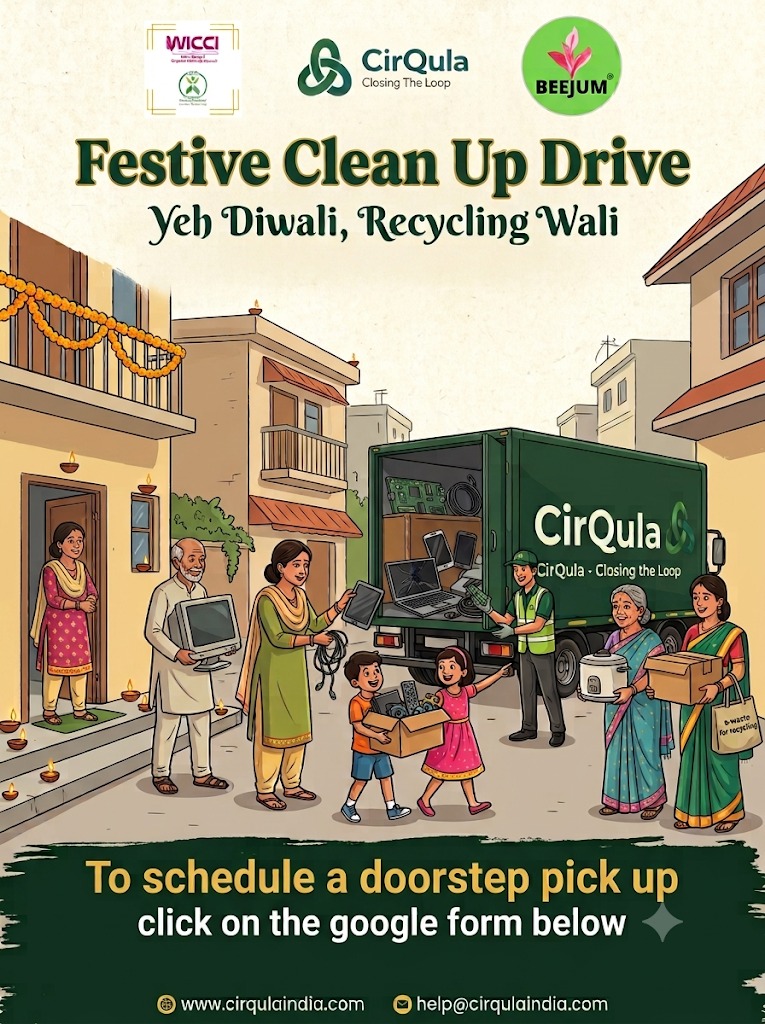
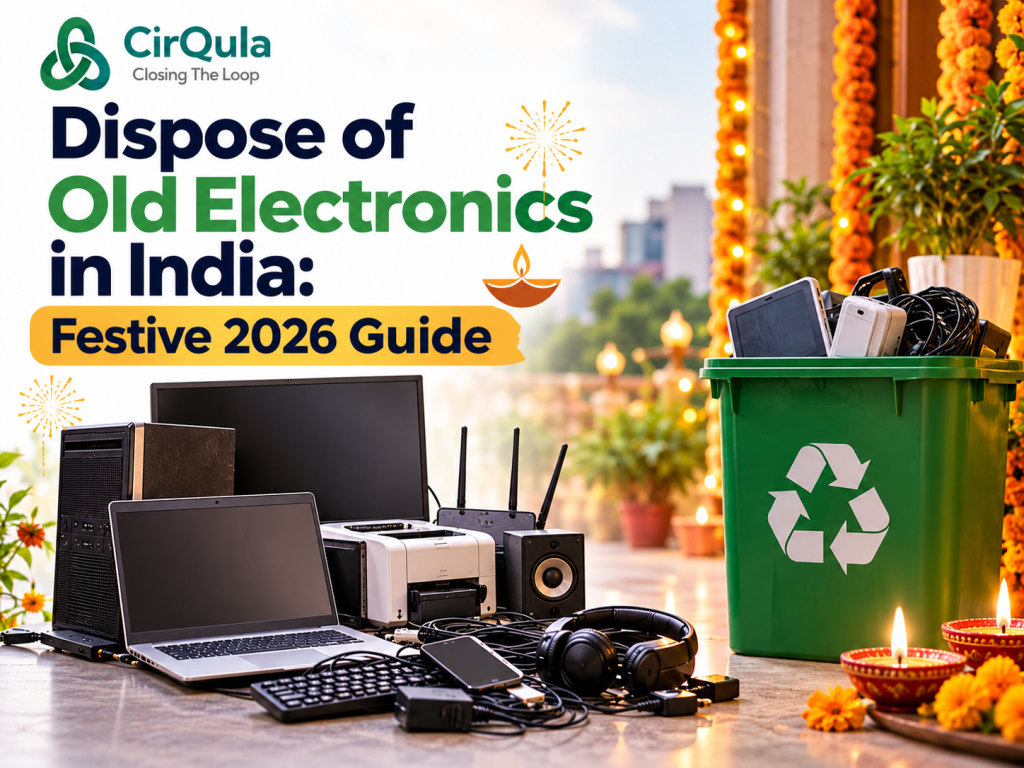
The dhak has gone quiet, the idols have been immersed, and the guests have left. Now comes the part every Bengali household knows: the post-Durga Puja clean-up. Between tangled fairy lights, dead power banks, the broken Bluetooth speaker, and the laptop in the almirah, most homes discover a small mountain of old electronics. This guide explains what to do with it, safely, legally and without regret.
What should you do with old electronics after Durga Puja?
Do not throw old electronics in the dustbin or sell them to a random scrap dealer. Instead:
(1) sort them into working, repairable and dead items,
(2) back up and wipe your data,
(3) donate or sell what still works, and
(4) hand the rest to an authorised e-waste recycler for doorstep pickup.
A certified recycler such as CirQula, an e-waste recycling company in Kolkata, collects devices from your home, destroys data securely and recycles components responsibly.
Why post-Puja is the best time to clear e-waste
Durga Puja ran from Shashthi on 16 October to Vijayadashami on 21 October 2026. With Kali Puja and Diwali only days away in early November, this is the natural “reset” window when families deep-clean, repaint and declutter. It is also when e-waste peaks: festive lighting, sound systems, new phones, new appliances and upgraded TVs all push older devices into the storeroom.
India’s numbers show why it matters. According to the Central Pollution Control Board (CPCB), the country generated about 13.98 lakh tonnes of e-waste in 2024-25, up from 7.08 lakh tonnes in 2017-18, and roughly 70% was formally collected and processed in 2024-25. Our e-waste recycling services exist to push that share higher, one household at a time.
What counts as e-waste? Your post-Puja checklist
E-waste is any discarded electrical or electronic item, working or not. After the festival, look for:
- Decorative LED strings and fairy lights that no longer glow
- Old mobile phones, chargers, earphones and power banks
- Laptops, desktops, keyboards, mice and routers from the study room or the office
- Speakers, sound boxes and DJ equipment used for the festivities
- Batteries, inverter batteries and rechargeable cells
- CFL and tube lights, which contain mercury
- Small appliances such as mixers, irons, fans, kettles and trimmers
- Old TVs, monitors and set-top boxes
- Extension boards and tangled cables
Not sure whether something qualifies? If it has a plug, a battery or a circuit board, treat it as e-waste. You can browse more guides on the CirQula e-waste blog.
Step-by-step: how to dispose of old electronics safely
Step 1: Sort into three piles
- Still works: resell, gift or donate.
- Repairable: take it to a trusted technician or a registered refurbisher.
- Dead or obsolete: send it for e-waste recycling.
Step 2: Back up your data
Copy photos, contacts, documents and WhatsApp chats to cloud storage or an external drive. Do this before anything else, because a wipe cannot be undone.
Step 3: Wipe your data properly
Identity theft from discarded devices is real. At a minimum:
- Sign out of Google, Apple, Microsoft and banking apps, and remove the device from your account
- Remove SIM and memory cards
- Run a factory reset (phones) or a full secure erase (laptops)
- For drives that held sensitive or office data, choose certified data destruction. CirQula’s data destruction service is built for exactly this.
Step 4: Handle batteries with care
Lithium-ion batteries can catch fire if punctured or crushed. If a battery is swollen, hot or leaking, do not charge it, do not open it, and keep it away from the pooja room, kitchen and cloth. Store it in a cool, dry place and arrange battery waste collection quickly.
Step 5: Book a doorstep pickup
Instead of hunting for a drop-off point, use an e-waste pickup service. CirQula advertises doorstep pickup within 24 hours with pan-India coverage, so you can hand over everything in a single visit.
Why you should never give e-waste to the local kabadiwala
It is convenient, but informal dismantling is risky. Burning cables for copper or acid-leaching circuit boards releases toxic fumes and contaminates soil and water. Lead, mercury, cadmium and brominated flame retardants harm workers and neighbourhoods. Your data may also be sold on. Authorised recyclers dismantle devices in controlled facilities and recover metals such as copper, gold and aluminium without the pollution. Read more about responsible e-waste recycling in India.
What the law says: E-Waste (Management) Rules, 2022
India’s E-Waste (Management) Rules, 2022 have been in force since 1 April 2023. They put manufacturers, producers, refurbishers and recyclers under Extended Producer Responsibility (EPR), require them to register on the CPCB portal, and introduced EPR certificates to reward formal recycling. Bulk consumers such as offices, schools and housing societies must hand e-waste only to registered producers, refurbishers or recyclers. CPCB data cited in Parliament lists 322 authorised e-waste recyclers in the country.
What this means for you: always ask your recycler for proof of authorisation and a disposal or recycling certificate. Companies and housing complexes should use a partner offering corporate e-waste disposal with documentation.
Puja committees, housing societies and offices: bulk e-waste tips
Pandal committees, residential complexes and businesses often end the festival with large volumes of LED lights, wiring, speakers and IT equipment. A few tips:
- Appoint one person to collect e-waste in a labelled bin
- Schedule one bulk pickup instead of many small ones
- Ask for a recycling certificate for your records
- Consider a collection drive linked to CSR e-waste programmes and awareness campaigns
Benefits of recycling your old electronics
- Protects your privacy through certified data destruction
- Prevents toxic pollution in Kolkata’s air, soil and water
- Recovers valuable metals and reduces mining pressure
- Supports the circular economy by feeding materials back into manufacturing
- Frees up space in your home before Diwali
- Keeps you compliant if you operate a business or society
Frequently asked questions
Q1. Where can I dispose of old electronics in Kolkata?
Use an authorised e-waste recycler with doorstep pickup, or a registered collection centre. CirQula offers e-waste collection in Kolkata and across India.
Q2. Can I throw old mobile phones and chargers in the regular dustbin?
No. They contain hazardous materials and valuable metals. Hand them to an authorised recycler instead.
Q3. How do I delete my data before recycling a laptop or phone?
Back up, sign out of all accounts, remove SIM and memory cards, then factory reset or securely erase the drive. For sensitive devices, use certified data destruction.
Q4. What should I do with dead LED fairy lights?
Treat them as e-waste. Bundle them with other small electronics for pickup rather than discarding them with festival waste.
Q5. Are swollen batteries dangerous?
Yes. A swollen or hot lithium battery can ignite. Stop using it, store it away from flammable items, and book battery waste collection promptly.
Q6. Is e-waste recycling free?
Costs vary by item, quantity and provider. Some items have resale or scrap value. Contact the CirQula team for details on your specific items.
Q7. What is EPR in e-waste?
Extended Producer Responsibility makes producers accountable for collecting and recycling the e-waste their products create, under the E-Waste (Management) Rules, 2022.
Conclusion: end the festival season on a green note
Durga Puja teaches us that every ending makes room for a new beginning. Make your post-Puja clean-up count: sort, back up, wipe, and send your old electronics to an authorised recycler. Ready to clear the clutter? Schedule a doorstep e-waste pickup with CirQula and explore more tips on the CirQula blog.